Four decades on one problem: motorcycle cylinders that fit right, run clean and last. Cast iron, aluminium alloy, ceramic-plated bores and big bore kits — 190 active part numbers shipping to the US, Japan and Europe.
A ceramic-plated bore replaces the conventional cast-iron liner: heat leaves the wall faster, the wall itself is thinner, and the same outside diameter yields a larger bore. Suited to high-revving and liquid-cooled platforms.
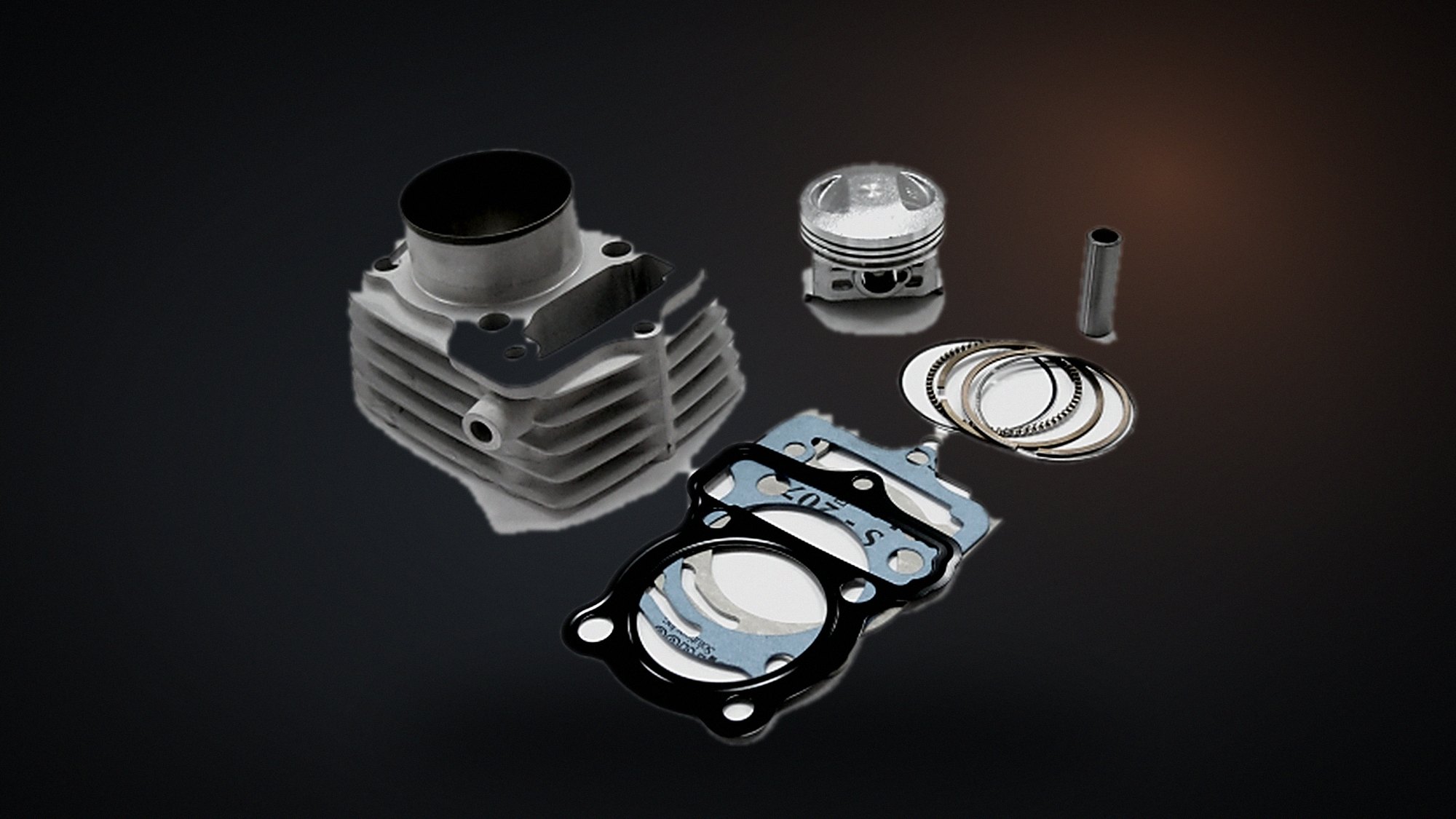
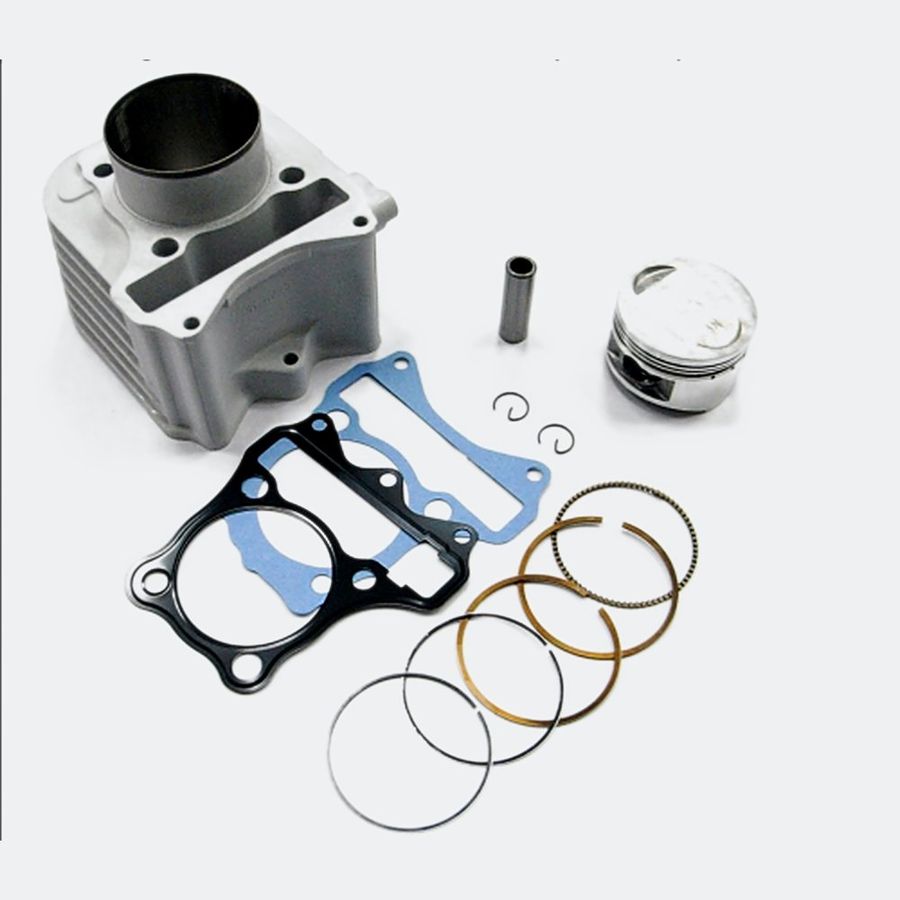
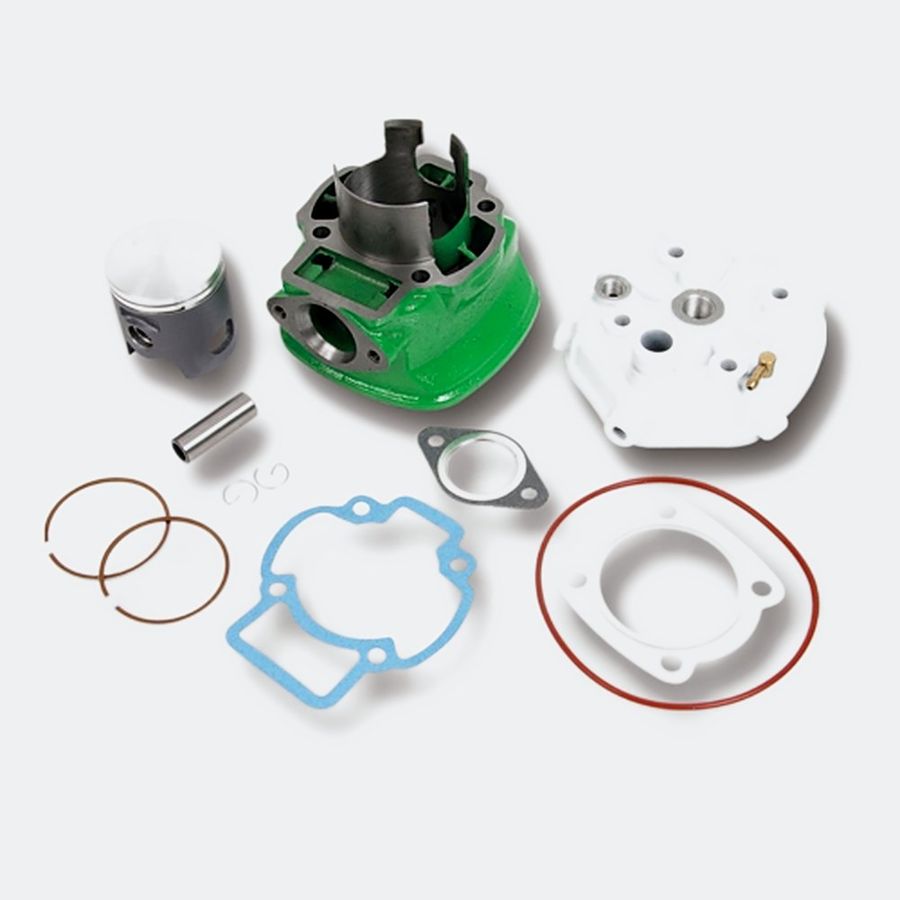
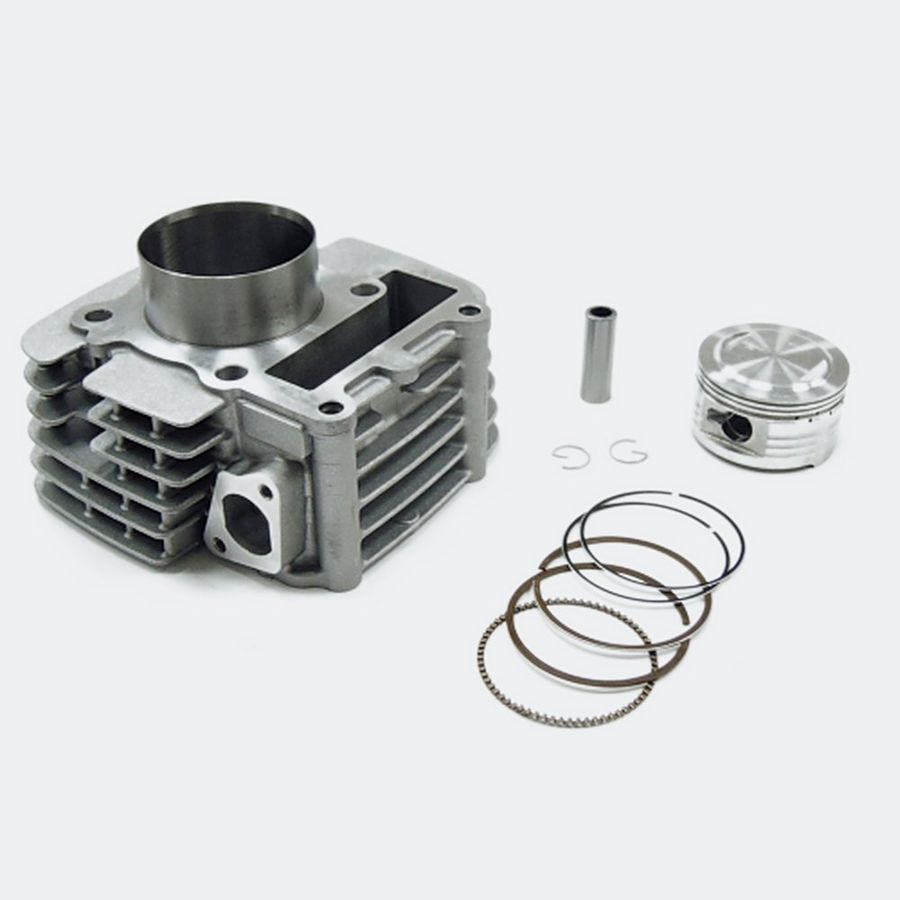
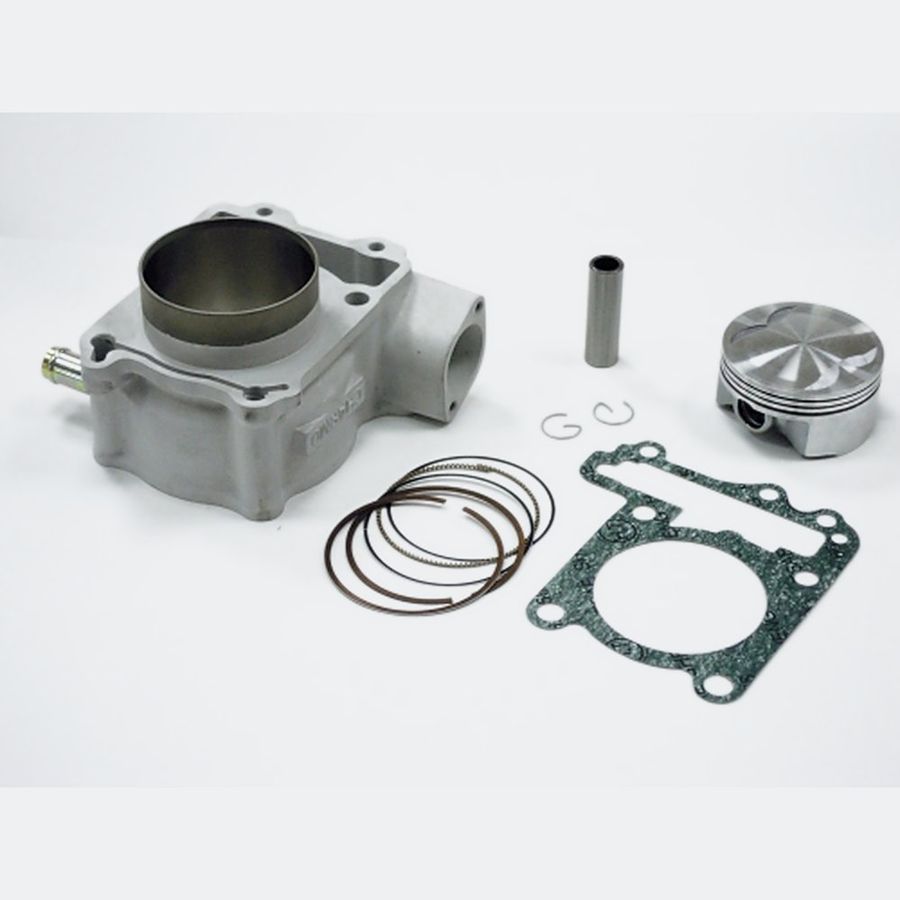
More displacement from a larger bore, with the crank stroke left alone. Each kit ships as a complete top end: cylinder, piston, rings, wrist pin and gaskets.
Every part number publishes its bore, stroke and displacement, so a distributor can match it against a customer's engine before ordering. Four decades in the aftermarket taught us the obvious: a return costs far more than one more measurement.
Four gates. Every one leaves a measurement record.
Casting & material
Cast iron or aluminium alloy, chosen per part number. Incoming stock is checked for structure and hardness first — a batch that reads wrong never enters the line.
Boring & honing
Rough bore, finish bore, hone. The crosshatch angle is held constant so the rings seat properly during break-in.
Surface treatment
Ceramic parts are plated at this stage; cast-iron parts have their liners pressed and re-machined so concentricity holds.
Gauging & kitting
Bore, roundness and surface finish are gauged piece by piece. What passes is kitted with its piston, rings, pin and gaskets and boxed as one assembly.